
Unexpected life events, from job loss to medical emergencies, can significantly impact our financial stability. Building a robust emergency savings fund acts as a crucial safety net, providing a financial cushion during unforeseen circumstances. This guide explores the importance of establishing an emergency fund, offering practical strategies for building and managing it effectively, ultimately securing your financial future.
We’ll delve into determining the appropriate savings amount based on individual circumstances, examining various savings methods and account types. We’ll also address how to integrate emergency savings into a broader personal finance plan, emphasizing its vital role in managing debt and achieving long-term financial goals. Understanding and implementing these strategies will empower you to navigate financial challenges with confidence and resilience.
Defining Emergency Savings Funds
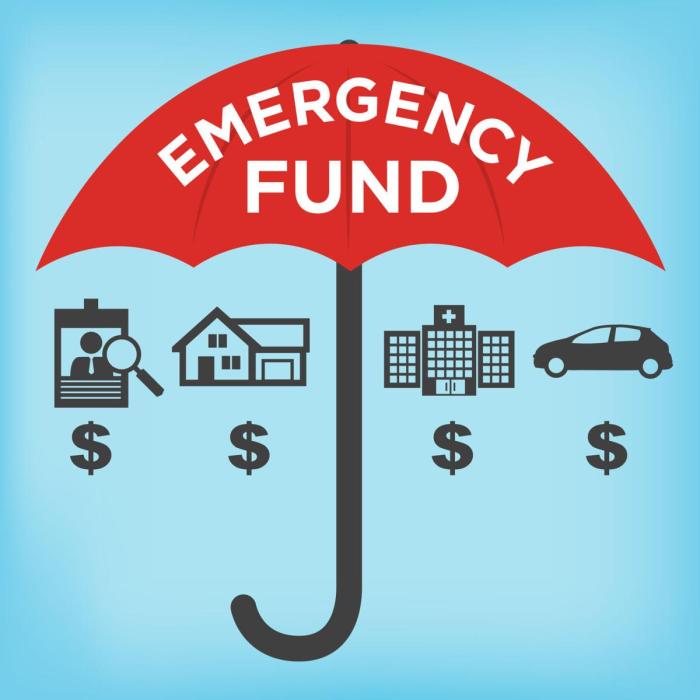
An emergency savings fund is a crucial component of a healthy financial plan, acting as a safety net to protect you from unexpected financial hardships. It provides a readily accessible pool of money to cover unforeseen expenses, preventing you from going into debt or disrupting your regular budget. Building and maintaining such a fund is a proactive step towards financial stability and peace of mind.An emergency fund differs significantly from other savings accounts.
While other savings vehicles might be geared towards long-term goals like retirement or a down payment on a house, an emergency fund is specifically designed for immediate access in times of crisis. The key differentiator is the priority of accessibility and liquidity over maximizing returns. Other savings accounts may prioritize higher interest rates, potentially sacrificing ease of access.
Unexpected Expenses Covered by an Emergency Fund
Unexpected expenses that can be covered by an emergency fund are numerous and varied. These can range from minor inconveniences to significant financial burdens. Examples include unexpected medical bills (such as a high deductible or copay), car repairs (engine failure, accident damage), home repairs (roof leak, appliance malfunction), job loss (covering living expenses until a new job is secured), or even unexpected travel expenses (flight cancellations, emergency travel).
Having a readily available fund mitigates the stress and financial strain associated with these situations.
Comparison of Savings Accounts for Emergency Funds
The choice of savings account for your emergency fund depends on your individual needs and priorities. Here’s a comparison of common options:
| Account Type | Interest Rate | Accessibility | Fees |
|---|---|---|---|
| High-Yield Savings Account | Generally higher than traditional savings accounts, but rates fluctuate. | Easy access via ATM, debit card, online transfers. | May have monthly maintenance fees if balance falls below a certain threshold. |
| Money Market Account (MMA) | Typically offers slightly higher interest rates than savings accounts, often with tiered interest rates based on balance. | Similar accessibility to savings accounts, with potential for limited check-writing capabilities. | May have minimum balance requirements and monthly fees if not met. |
| Checking Account with High Interest | Interest rates are generally lower than savings accounts but offer convenient access. | Very easy access via debit card, checks, and online transfers. | May have monthly maintenance fees, especially if not meeting minimum balance requirements. |
| Certificates of Deposit (CDs) | Higher interest rates than savings accounts, but with penalties for early withdrawal. | Limited accessibility; funds are locked in for a specified term. | Generally low fees, but early withdrawal penalties can be substantial. |
Determining the Right Amount to Save
Building an emergency fund is crucial for financial stability, but determining the ideal amount can feel overwhelming. The right amount isn’t a one-size-fits-all figure; it depends on individual circumstances and risk tolerance. Several factors contribute to defining your personal emergency fund target.Factors Influencing Emergency Fund SizeThe size of your emergency fund should reflect your unique financial situation. Higher income generally allows for a larger emergency fund, providing more cushion against unexpected events.
Conversely, those with lower incomes might aim for a smaller, but still substantial, reserve. Your monthly expenses play a critical role; higher expenses require a larger fund to cover potential disruptions. Lifestyle choices also influence the necessary fund size. Someone with a stable job and low debt might need less than an entrepreneur with fluctuating income and high debt.
The 3-6 Month Emergency Fund Rule
The widely accepted guideline suggests saving 3-6 months’ worth of essential living expenses. This rule provides a reasonable safety net for most individuals. However, its applicability varies. For instance, individuals in high-risk professions or with significant debt might benefit from a larger fund, perhaps exceeding 6 months of expenses. Conversely, those with stable employment and minimal debt might find 3 months sufficient.
The 3-6 month rule acts as a starting point, requiring personalized adjustments based on individual circumstances and risk appetite.
Calculating Your Personalized Emergency Fund Goal
A simple calculation helps determine your target. First, list all essential monthly expenses: rent/mortgage, utilities, groceries, transportation, minimum debt payments, and essential healthcare costs. Sum these expenses to obtain your monthly essential spending. Then, multiply this figure by 3 or 6, depending on your risk tolerance and financial situation. For example, if your essential monthly expenses total $2,000, a 3-month emergency fund would be $6,000, while a 6-month fund would be $12,000.
Emergency Fund Goal = (Monthly Essential Expenses) x (Number of Months of Coverage)
Strategies for Faster Emergency Fund Growth
Building an emergency fund requires disciplined saving. Several strategies can accelerate the process. Cutting unnecessary expenses, such as dining out or entertainment subscriptions, frees up funds for savings. Identifying areas where spending can be reduced, even marginally, can significantly impact savings over time. Increasing income through a side hustle or negotiating a salary raise also boosts savings potential.
Automating savings by setting up regular transfers from your checking account to your savings account ensures consistent contributions without requiring constant manual effort. Finally, prioritizing saving by treating it as a non-negotiable expense helps ensure consistent progress towards your emergency fund goal.
Establishing and maintaining an emergency savings fund is a cornerstone of responsible financial planning. By diligently saving and strategically managing your funds, you’ll not only protect yourself from unexpected financial hardship but also cultivate a sense of financial security and peace of mind. Remember, the journey to financial stability begins with a well-defined plan and consistent action. Start building your emergency fund today and secure your financial future.
FAQ Insights
What is the best type of account for an emergency fund?
High-yield savings accounts generally offer the best combination of accessibility and interest rates for emergency funds. However, consider factors like fees and minimum balance requirements.
How often should I contribute to my emergency fund?
Regular contributions, even small ones, are key. Aim for consistent contributions, ideally weekly or bi-weekly, to build your fund steadily.
Can I use my emergency fund for non-emergencies?
While tempting, using your emergency fund for non-emergencies undermines its purpose. Prioritize using it only for unexpected and essential expenses.
What if I’ve already depleted my emergency fund?
Immediately begin rebuilding your emergency fund. Re-evaluate your budget and explore additional income streams to replenish it quickly.


