
Mastering personal finances can feel daunting, but the right tools can transform the process from overwhelming to empowering. This guide explores the diverse landscape of financial planning tools, from budgeting apps to investment platforms, offering a comprehensive overview to help you navigate your financial journey with confidence. We’ll delve into the features, benefits, and considerations of various tools, equipping you to make informed decisions that align with your specific financial goals and technological comfort level.
We will cover a range of tools categorized by function, providing practical examples and comparisons. We’ll also address critical aspects like security, ease of use, and integration with existing financial accounts. Ultimately, this guide aims to demystify financial planning and empower you to take control of your financial future.
Utilizing Financial Planning Tools for Budgeting
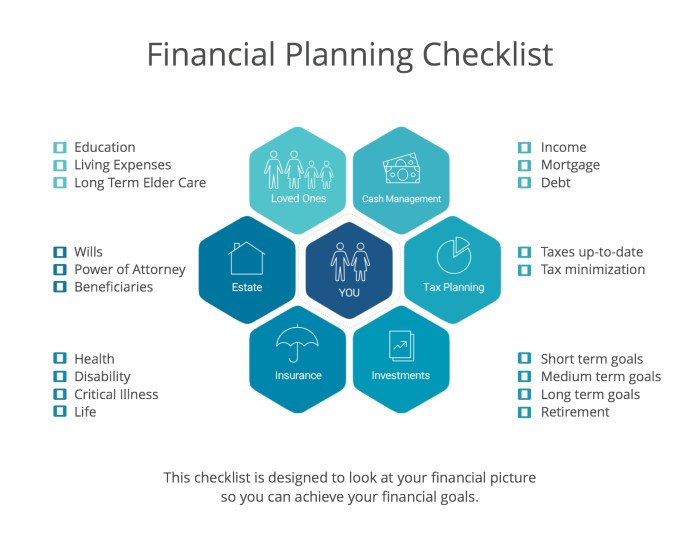
Effective budgeting is crucial for achieving financial stability and reaching your financial goals. Financial planning tools, whether mobile apps or desktop software, significantly simplify this process by providing structured ways to track income, expenses, and progress toward savings targets. These tools offer visual representations of your financial data, making it easier to understand your spending habits and make informed decisions.
A Step-by-Step Guide to Budgeting App Usage
Using a budgeting app typically involves a straightforward process. First, you’ll need to download and install the app (many free options are available). Then, you’ll connect your bank accounts (if the app supports it) or manually input your income and expenses. The app will then categorize your transactions, providing a visual overview of your spending patterns. For example, a pie chart might show the percentage of your income allocated to different categories like housing, food, and entertainment.
A bar graph might show your spending over time, highlighting trends and potential areas for improvement. A sample screenshot might show a pie chart with “Housing” taking up 30%, “Food” 20%, “Transportation” 15%, “Entertainment” 10%, and “Savings” 25%. Another screenshot might show a line graph illustrating monthly spending over the past six months, with a clear upward trend in entertainment spending during the holiday season.
Finally, the app allows you to set a budget for each category, enabling you to monitor your spending against your allocated amounts. If you exceed your budget in a particular area, the app will usually provide a clear visual alert.
Implementing Different Budgeting Methods
Various budgeting methods can be effectively implemented using financial planning tools. The 50/30/20 rule, for instance, suggests allocating 50% of your after-tax income to needs, 30% to wants, and 20% to savings and debt repayment. A budgeting app can easily track this by allowing you to create budget categories that align with these percentages. Zero-based budgeting, which requires you to allocate every dollar of your income to a specific expense or savings goal, can also be managed within these tools.
The app can assist in ensuring that all your income is accounted for and that you’re sticking to your planned allocations. For example, you might create budget categories for each bill (rent, utilities, loan payments) and assign a specific amount to each. Any remaining funds would be allocated to savings or discretionary spending.
Setting and Tracking Financial Goals
Financial planning tools are invaluable for setting and monitoring financial goals. Whether you aim to save for a down payment, pay off debt, or build an emergency fund, the app will allow you to input your target amount and timeline. The app will then track your progress, showing you how close you are to reaching your goal. For example, if your goal is to save $10,000 for a down payment within two years, the app will display your current savings, the remaining amount needed, and an estimate of how long it will take to reach your goal based on your current savings rate.
This visual representation of your progress can be highly motivating and helps maintain focus on your financial objectives. The app may also provide suggestions for increasing your savings rate to reach your goal faster.
Investing with Financial Planning Tools
Financial planning tools offer significant advantages when it comes to investing, streamlining the process from selecting an investment platform to managing your portfolio effectively. These tools provide a centralized location to track investments, analyze performance, and adjust strategies based on your evolving financial goals and risk tolerance. By leveraging these platforms, you can gain a clearer understanding of your investment options and make more informed decisions.
Investment Platform Comparison
Choosing the right investment platform is crucial for a successful investment journey. Different platforms offer varying investment options, fee structures, and account types, each catering to different investor needs and preferences. Careful consideration of these factors is vital before committing to a specific platform.
- Investment Options: Platforms vary widely in the types of investments they offer. Some may focus primarily on stocks and bonds, while others provide access to mutual funds, exchange-traded funds (ETFs), options, futures, and even alternative investments like real estate or cryptocurrency. Consider your investment goals and risk tolerance when evaluating the available options.
- Fees: Investment platforms charge various fees, including account maintenance fees, trading commissions, and expense ratios on mutual funds or ETFs. Some platforms offer commission-free trading, while others charge per trade. It’s essential to understand the complete fee structure to accurately assess the overall cost of investing on a particular platform.
- Account Types: Most platforms offer different account types, such as brokerage accounts, retirement accounts (IRAs, 401(k)s), and custodial accounts for minors. The choice of account type depends on your investment goals and tax implications. Retirement accounts often offer tax advantages, while brokerage accounts provide more flexibility.
Creating a Diversified Investment Portfolio
A diversified investment portfolio is crucial for mitigating risk and maximizing returns. Financial planning tools often include portfolio analysis features that help you assess the diversification of your holdings. These tools can guide you in constructing a portfolio aligned with your risk tolerance and financial goals.Diversification involves spreading your investments across different asset classes (stocks, bonds, real estate, etc.) and sectors to reduce the impact of any single investment’s underperformance.
For example, a conservative investor with a low risk tolerance might allocate a larger portion of their portfolio to bonds and less to stocks, while a more aggressive investor might favor a higher allocation to stocks. Financial planning tools often provide risk assessment questionnaires to help determine your appropriate risk profile. They may also offer pre-built portfolio models or allow you to customize your allocation based on your individual needs.
Setting Up and Managing Automatic Investments
Many investment platforms offer the ability to automate your investments, a strategy known as dollar-cost averaging (DCA). Dollar-cost averaging involves investing a fixed amount of money at regular intervals, regardless of market fluctuations. This strategy helps mitigate the risk of investing a lump sum at a market peak.Using a financial planning tool, you can typically schedule automatic transfers from your bank account to your investment account on a weekly, bi-weekly, or monthly basis.
This automated process ensures consistent investing, regardless of market conditions or your own busy schedule. The platform will execute the purchase of assets according to your pre-defined allocation, automatically adjusting your portfolio as you contribute more funds. This simplifies the investing process and contributes to a disciplined investment approach.
Financial Planning Tools and Personal Finance
Financial planning tools have revolutionized personal finance management, empowering individuals to take control of their financial well-being and achieve long-term goals more effectively. These tools, ranging from simple budgeting apps to sophisticated investment platforms, offer a range of functionalities designed to simplify complex financial processes and provide valuable insights into personal finances. By leveraging these tools strategically, individuals can significantly improve their financial health and build a more secure future.Financial planning tools play a crucial role in achieving various personal finance goals.
Their applications span a wide spectrum of financial objectives, offering support and guidance throughout the process.
Debt Reduction Strategies Using Financial Planning Tools
Many financial planning tools offer features specifically designed to assist with debt reduction. These features often include debt trackers that allow users to input their outstanding debts, interest rates, and minimum payments. The tools then calculate total debt, interest paid over time, and potential savings from accelerated repayment strategies. Some tools even suggest optimal debt repayment strategies, such as the debt snowball or debt avalanche methods, to help users prioritize and efficiently eliminate their debts.
By providing a clear visual representation of debt and suggesting effective repayment plans, these tools significantly enhance the debt reduction process. For example, a user could input their credit card debt, student loans, and car loan details. The tool would then calculate the total interest paid annually and suggest the most efficient repayment method to minimize the overall cost and time to pay off the debt.
Homeownership Planning with Financial Planning Tools
Financial planning tools can be invaluable in the journey towards homeownership. These tools often include mortgage calculators that allow users to estimate monthly payments based on various loan terms, interest rates, and down payment amounts. They can also help users determine their affordability by considering their income, expenses, and debt levels. Furthermore, some tools offer features to track savings progress towards a down payment and simulate different home purchase scenarios to help users make informed decisions.
For instance, a tool could show the impact of increasing the down payment on the monthly mortgage payment, or the effect of a longer loan term on the total interest paid over the life of the loan. This allows for a more informed and realistic approach to home buying.
Retirement Planning with Financial Planning Tools
Retirement planning is a complex process, and financial planning tools simplify this considerably. These tools often include retirement calculators that project future retirement income based on current savings, investment returns, and anticipated expenses. They can also simulate different retirement scenarios, allowing users to explore the impact of various factors, such as changes in investment returns or retirement age, on their retirement income.
Moreover, some tools offer guidance on investment strategies and asset allocation to optimize retirement savings growth. For example, a user can input their current savings, expected retirement age, and desired retirement income. The tool will then project their savings growth over time, highlighting any potential shortfalls and suggesting adjustments to their savings plan.
Common Mistakes When Using Financial Planning Tools
Using financial planning tools effectively requires careful attention to detail and a realistic understanding of their limitations. One common mistake is inputting inaccurate data, which leads to unreliable projections and potentially flawed financial decisions. Another frequent error is relying solely on the tool’s recommendations without critically evaluating the information and considering personal circumstances. Finally, neglecting to regularly update the data in the tool can render the information outdated and irrelevant.
Strategies for Avoiding Mistakes with Financial Planning Tools
To maximize the benefits of financial planning tools, users should prioritize accuracy in data entry. This involves carefully reviewing all inputted information and cross-checking it with official documents. Additionally, users should treat the tool’s recommendations as guidelines rather than absolute truths, incorporating their own judgment and understanding of their financial situation. Regularly updating the data within the tool is crucial to ensure the projections remain relevant and reflect the user’s current financial circumstances.
Finally, seeking professional financial advice can supplement the information provided by the tool, offering a more comprehensive approach to financial planning.
Tips for Maximizing Benefits of Financial Planning Tools
Explore different tools to find one that best suits individual needs and preferences. Utilize all features offered by the chosen tool to gain a comprehensive understanding of personal finances. Integrate the tool into a broader financial planning strategy that considers other factors beyond the tool’s scope. Regularly review and adjust the plan as needed to reflect changes in financial circumstances and goals.
Successfully managing your finances requires a proactive approach and the right tools. By understanding the various financial planning tools available and choosing those that best suit your needs, you can build a strong foundation for achieving your financial goals, whether it’s saving for a down payment, investing for retirement, or simply gaining a clearer picture of your current financial situation.
Remember, the journey to financial wellness is a continuous process, and the right tools can make all the difference.
FAQ Overview
What are the security risks associated with using online financial planning tools?
Security risks include data breaches, phishing scams, and unauthorized access. Choose tools with strong encryption, two-factor authentication, and reputable security certifications. Regularly review your account activity and report any suspicious behavior.
How do I choose a financial planning tool that integrates with my existing bank accounts?
Many tools offer direct integration with major banks and financial institutions via APIs. Check the tool’s website or documentation for a list of supported institutions before selecting a tool.
Are there free financial planning tools available?
Yes, many free tools offer basic budgeting and tracking features. However, more advanced features, such as investment management or tax preparation, often require paid subscriptions.
How often should I review and adjust my financial plan?
Regular review is crucial. At least annually, and more frequently if there are significant life changes (job change, marriage, etc.), re-evaluate your goals, budget, and investment strategy to ensure they remain aligned with your current circumstances.


